• Reach Carriage
  • Reach Carriage

Reach Carriage

What is a Reach Carriage?
Reach Carriage is a specialized attachment in certain forklifts designed to extend the forks forward to pick up loads, while keeping the truck's body compact. It acts like an "extendable arm" of a forklift.

What Does It Do?
"Reach" the forks out from the mast to handle pallets. This allows the forklift itself to stay outside a narrow aisle while its forks enter to store or retrieve a load.

How It Works?
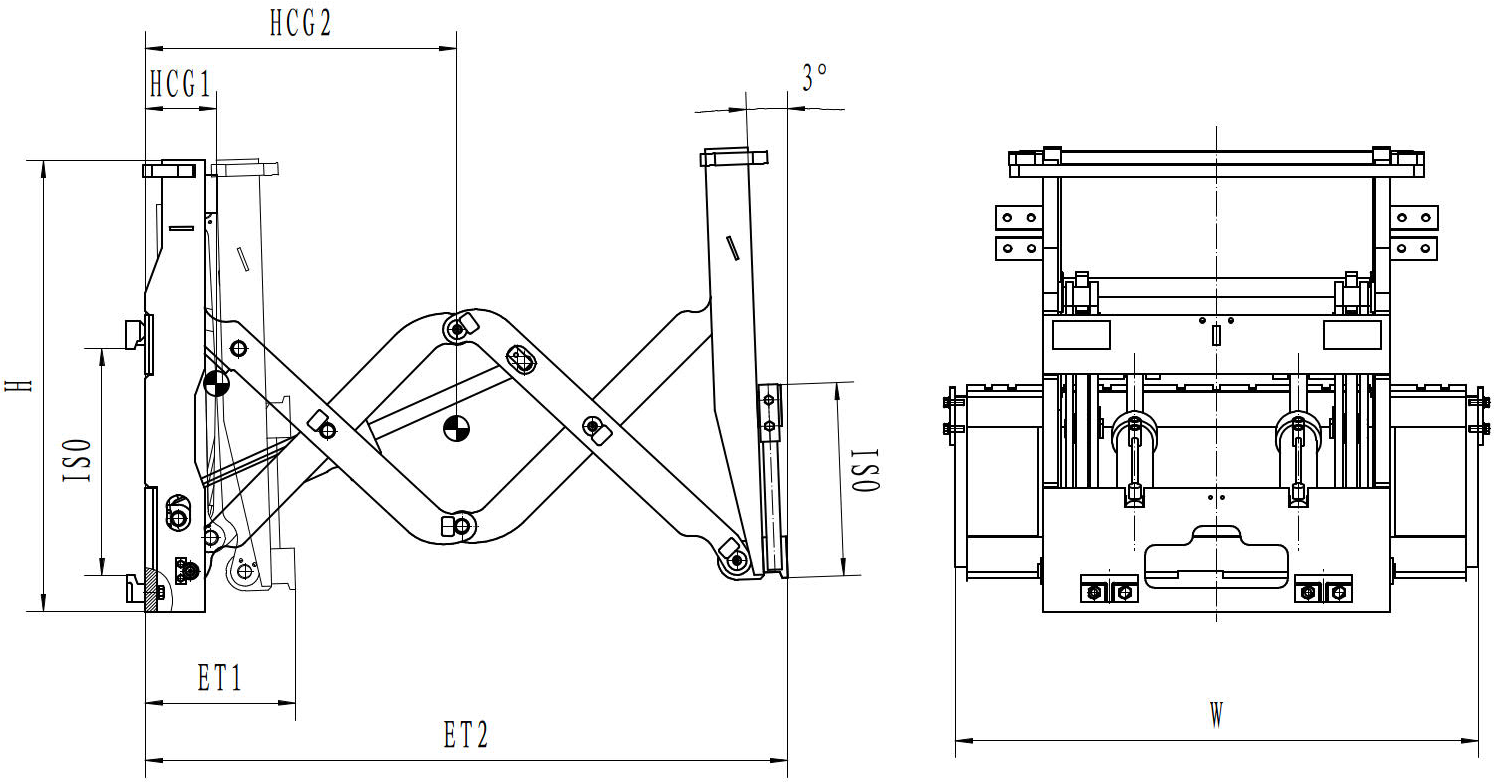
Unlike a standard forklift where the carriage and forks are fixed in their forward position, a reach carriage slides forward and backward on integrated rails or pantograph arms.

1. Reach Function (Fork Extension): The operator uses a control to slide the entire carriage and forks forward, extending them into the racking to pick up a pallet.

2. Retract Function (Fork Retraction): After the pallet is lifted, the carriage retracts, pulling the load back close to the mast. This shifts the load's center of gravity over the truck's axle, making it stable for travel.


  • Reach Carriage

Description

Why Is It So Important? 

The reach carriage is the key to high-density storage. Its main advantages are:

  • Narrow Aisle Operation: It allows forklifts to work in aisles barely wider than the load itself, dramatically increasing storage capacity in a warehouse.

  • Increased Stability: By retracting the load, it makes the forklift much more stable when traveling compared to carrying the load extended.

  • No Need for Attachment: The reach mechanism is built-in, so it doesn't require an additional attachment like a "telescopic fork" would on a standard counterbalance forklift.


Reach Carriage vs. Telescopic Forks

This is a common point of confusion, as both extend the forks.

  • A Reach Carriage is the core, built-in feature of a specific type of forklift (for example, a reach truck). The entire carriage assembly moves.

  • Telescopic Forks are typically an aftermarket attachment added to the carriage of a standard forklift (like a counterbalance forklift) to give it some limited reach capability for specific tasks (e.g., double-deep racking).